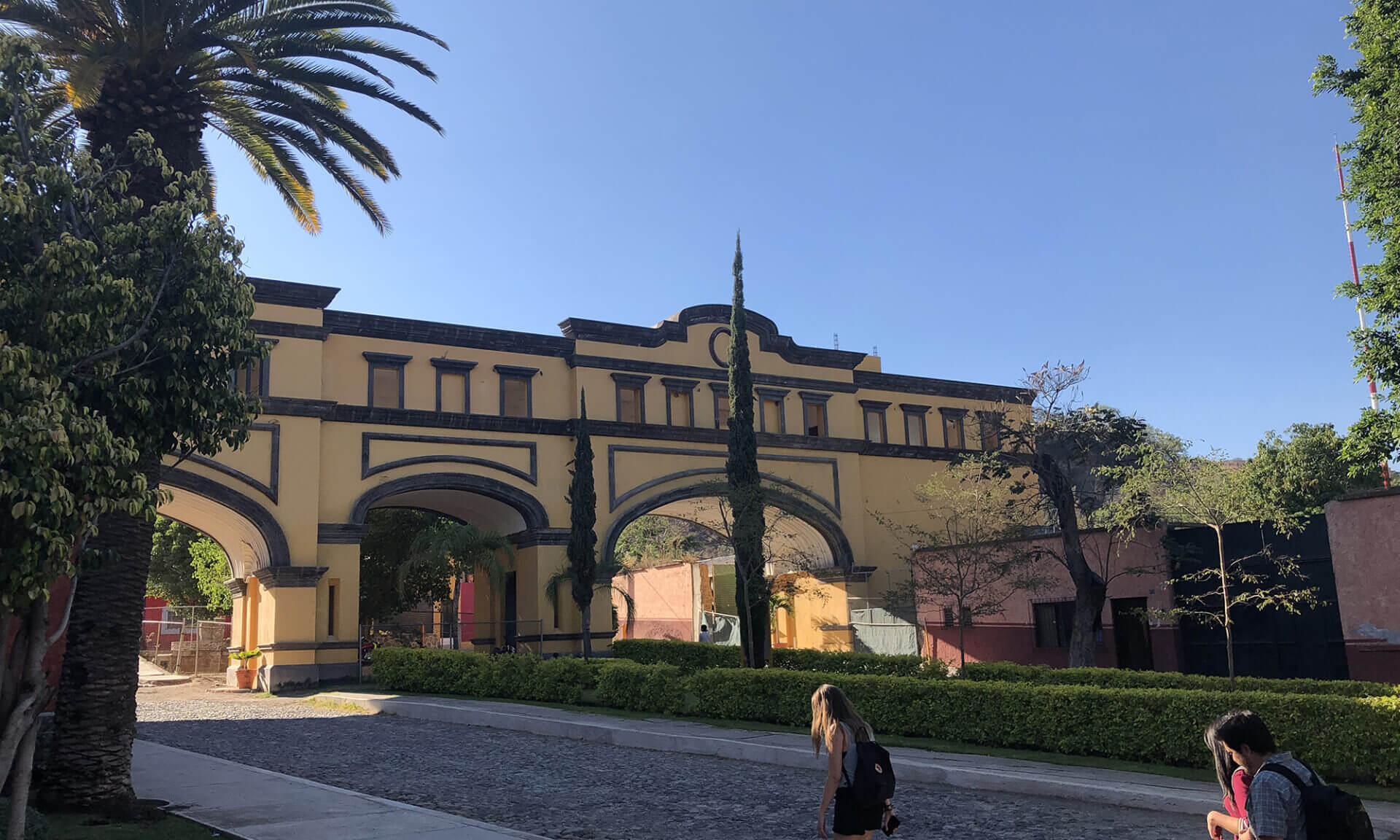
In hospitality, multifamily, mixed-use, and even gaming environments, first impressions are more than a fleeting moment—they set the emotional tone for the entire experience. Long before a guest reaches the front desk, settles into a room, or sits down to dine, the landscape establishes an immediate sense of welcome, quality, and identity. This “arrival experience” is one of the most powerful components of design.
The Approach from the Road: Setting Expectations
A guest’s journey begins well before they step onto the property. As they approach, you want what they see to be welcoming, inviting them to come in and explore. The view from the road—framing, plant massing, lighting, and the overall streetscape—signals what kind of place they’re entering. It can convey luxury, relaxation, privacy, excitement, or understated sophistication.
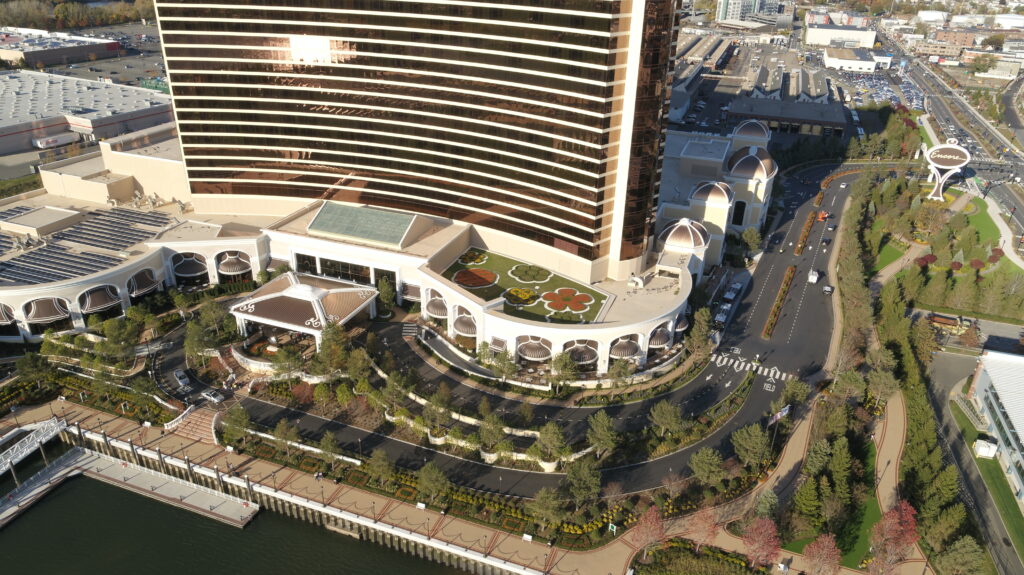
In the example of Encore Boston Harbor, the landscape along the surrounding streets provides the first hint of the resort’s elevated experience, transforming from the surrounding industrial area into a lush, engaging approach. Framed by the marquee and archway signage, the arrival sequence leads guests along a sculpted evergreen berm that discreetly shields the surrounding environment. The massing of 25- to 30-foot spruce trees guides the eye toward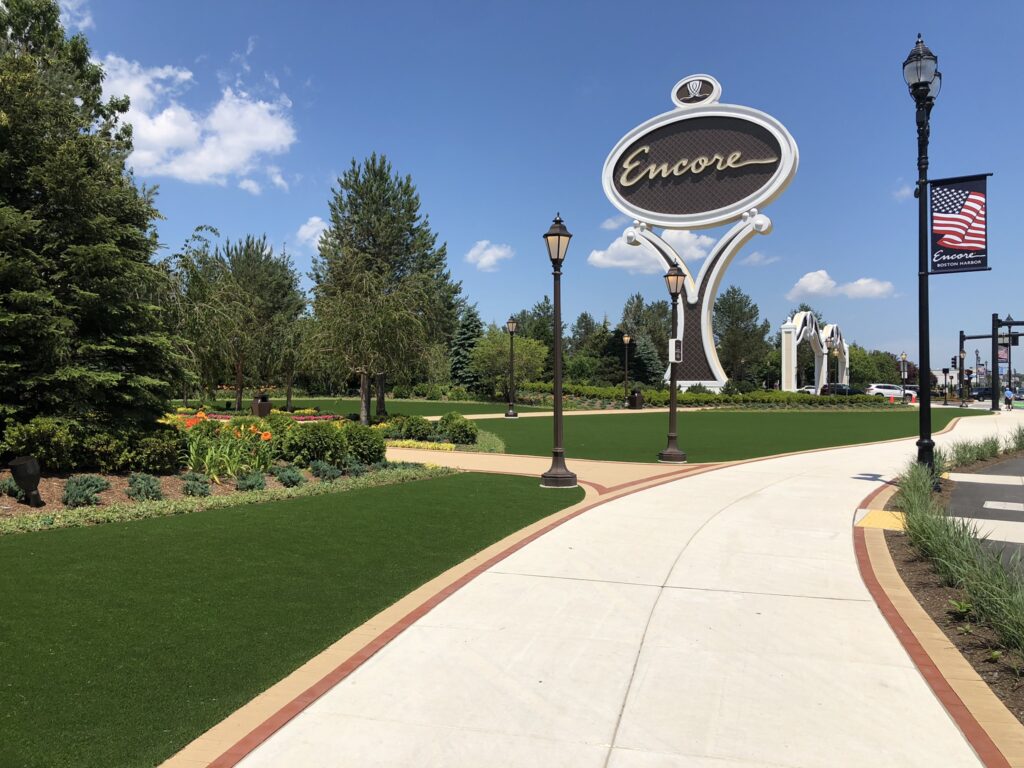 the hotel tower and surrounding buildings as they come into view, signaling that guests are entering an oasis distinctly separate from the city beyond.
The Threshold: Where Arrival Takes Shape
The Entry Drive is more than a pathway. As a guest turns onto the property, whether in hospitality, mixed use or multifamily destinations, it is the first designed moment they fully engage with, immediately conveying the brand or property’s ethos. Not simply a route to the front door, it is an orchestrated sequence that guides views, highlights architectural features, and builds anticipation. A clear, memorable arrival sequence helps residents and visitors mentally transition from the bustle of the city to a curated environment designed for comfort and connection.
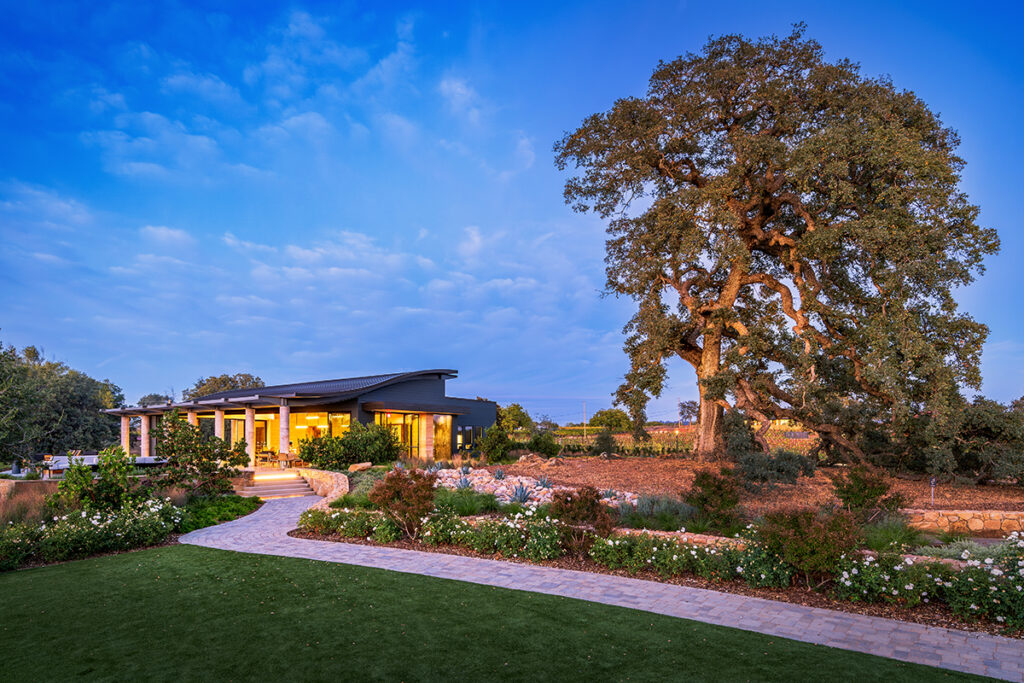 At Casino Mine Ranch Winery, the winding entry road gently reveals the vineyard landscape, reinforcing the project’s organic luxury and deep connection to place. A large heritage oak signals the site’s history as a cobbled pathway continues to lead guests toward a secluded tasting room, framed by expansive views of the surrounding landscape.
In more immersive hospitality environments, the entry sequence often culminates in a courtyard or arrival forecourt—a spatial pause that allows guests to fully register the setting before proceeding inside. For example, at Hotel Drover in Fort Worth, native plantings, warm materials, and an authentic ranch character establish the property’s modern Western hospitality narrative well before guests reach the door. The landscape does the storytelling first, grounding the experience in place and setting expectations through texture, scale, and materiality.
In urban environments like The Americana at Brand, the approach shifts from creating separation to celebrating context. Through carefully orchestrated planting, street trees, and architectural cues, the arrival sequence invites pedestrians and motorists alike to venture deeper. 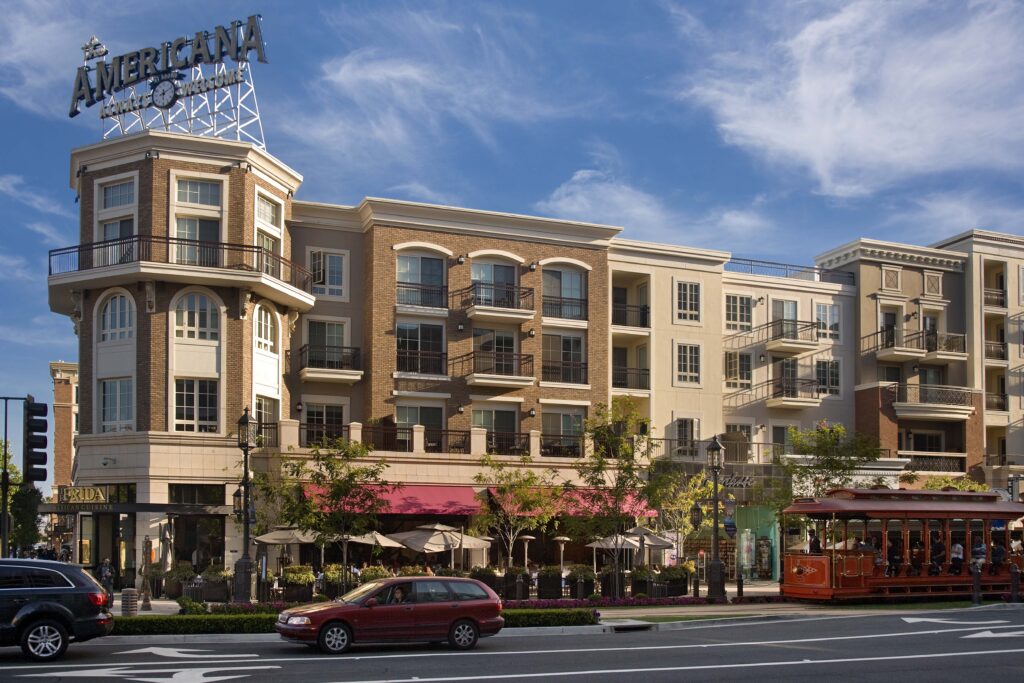 The experience unfolds into a park-like landscape animated by dancing fountains and a lively pedestrian rhythm, giving way to a dynamic lifestyle destination filled with activity and charm.
No matter the property, the goal remains the same: to shape an emotional transition. Arrival should feel effortless, intuitive, and intentional.
The Porte Cochère: Hospitality’s First Handshake
The porte cochère or motor court is where guests pause, step out of the car, and take in the environment—and this moment needs to resonate. Well-designed, they do more than provide shelter or greeting at the door; they create scale, comfort, and orientation. They blend architecture and landscape to frame the entry sequence, soften edges, and deliver a sense of welcome that reflects the brand.
 At The Sun Rose West Hollywood Hotel and Residences, the contemporary, Old Hollywood-inspired motor court creates separation and exclusivity with tall hedges that layer together with large, sculptural trees, and refined detailing to create an elevated sense of arrival.
Carrying the Arrival Indoors
Landscape architecture doesn’t stop at the door. Views from the lobby extend the arrival experience, bridging indoor and outdoor spaces to create continuity and calm. Strategic planting, unique pottery, pathways into the property, water features, and natural daylight reinforce the sense of place and allow the interior to feel connected to the destination’s unique character.
Whether it’s a five-star resort, a boutique hotel, a casino, a multifamily community, or a retail destination, the arrival experience is a brand promise fulfilled within seconds. Thoughtful landscape architecture transforms the arrival from a utilitarian moment into a curated narrative—one that invites, delights, and sets expectations for the entire stay.
It is more than a simple greeting; it is design extending a hand and saying, unmistakably, “welcome.”